
Winter Pruning
The structure of a tree is more pronounced in winter.With the holidays upon us it is very hard to focus our attention elsewhere. It is easy to ignore your faithful, irreplaceable trees at this time of year surrounded by holiday music, lights and family. Do I hear the pitter patter of reindeer on the roof or is that a tree limb that was not properly pruned?
Protecting your valuable shade trees from winter storms is as easy as proper pruning. Protecting your residence from the constant scraping of limbs flailing back and forth in the winter winds may help keep home maintenance costs down. A limb that ranges too close to the home will eventually rub the roof shingles or siding off of the most important member of the property, your house.
Proper pruning is one of the best things you can do to preserve trees in the landscape! In my experience as an ISA Certified Arborist, large trees that are pruned regularly may be the difference between a long life or the sudden demise of your mature shade trees. Regular or routine pruning means at least once every four years to correct structural growth and remove all visible dead wood. Regular pruning may be the difference between expensive repair bills or a happy house and trees.
There are several types of pruning that may be done for trees in the winter.
Horticultural Pruning: The judicial thinning and shaping of ornamental woody plants to allow air circulation and light penetration. Trees with intact structures may only need minor pruning to keep them separate from the house and other plants.
Structural Pruning: This type of pruning reduces weak limbs and branch attachments that can fail in heavy snow or wind. Your arborist may choose to remove a weak limb or support important structural limbs with cabling or braces to minimize the possibility of damage to the tree as a whole.
Rejuvenation Pruning: Pruning in late February and early March to rejuvenate overgrown and misshapen woody shrubs can mean the difference between renovating a landscape or redoing a landscape and starting over.
Contact us to speak to an ISA Certified Arborist today and they will help you determine a course of action for your property’s trees and shrubs. Have the happiest of holidays!
Written by Gary Carbocci

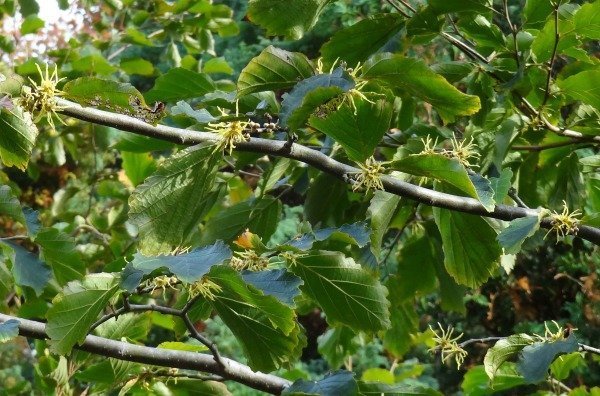 As we enter November and the mums finish flowering, fall may feel bittersweet. Bitter in the sense that winter is approaching and sweet with the delicious aromas of pumpkin spices, wood smoke and hot apple cider. Fall is a great time to witness local foliage change from green to rich, vibrant hues of purple, red, orange and gold.
 Dwarf Fothergilla in fall color
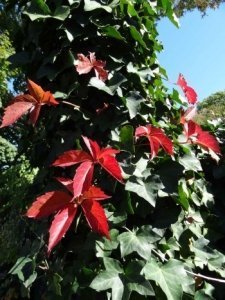 Virginia Creeper in English Ivy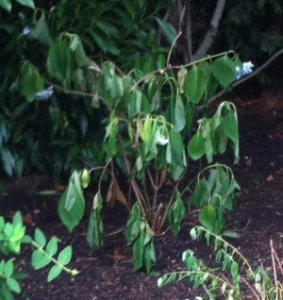
 Fall Takes Root
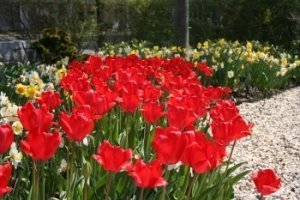 Bulbs. My favorite kind of fall shopping. The varieties available get more diverse and spectacular every year. We’re placing orders now for installations to occur before Thanksgiving. Many times the first signs of spring are those crocus and miniature daffodils coming up in almost bare beds. Don’t miss out on a fantastic spring color display! Daffodils are critter resistant but tulips are on the menu for deer, squirrels and other furry friends so plan accordingly. The key to a show stopping bulb display is massing. If there weren’t enough one year, add more for the next season. You can never have too many bulbs! They are some of the most cost efficient plants you can put in your garden, especially if you get a naturalizing variety which will multiply and bloom for many years.
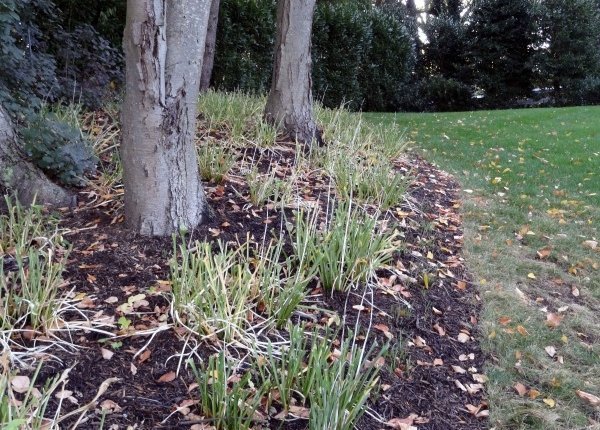
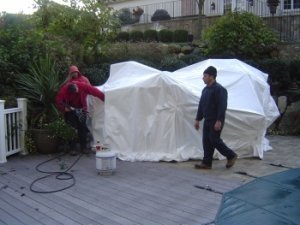 Don’t forget to schedule your fall cleanup. Perennials and ornamental grasses need to be cut down, leaves collected and disposed of, whether on the ground or in the gutters. A blocked gutter can cause roof leaks if the water backs up under the shingles. Protect your outdoor furniture. We offer shrink wrapping for pots, tables and chairs, barbecues and other outdoor furnishings. Remember to have a professional blow out irrigation and pool lines to prevent damage from water freezing and thawing in the lines throughout the season. Drain and cover any fountains. Talk to a professional for pond care and winterization if you have animals in the pond. Hungry birds and raccoons can make a meal out of unsuspecting koi and goldfish when the weather turns nasty.