• Facebook
  • Instagram
  • Mail
  • Contact
  • Bill Pay
  • 631-271-6460
Goldberg & Rodler, Inc.
  • PORTFOLIO
  • SERVICES
  • ABOUT
    • OUR AWARDS
    • OUR TEAM
    • OUR BLOG
    • SUSTAINABILITY
    • CAREERS
  • Goldberg & Rodler, Inc.
    • PRODUCT LABELS
  • Menu Menu

Fall & Winter Services

October 17, 2014/in Planting, Maintenance /by Goldberg and Rodler

As we put our yards and garden to sleep for the colder months, we should consider measures to protect our landscapes just as we do in the growing season. Plants slowly become dormant when temperatures drop. They still need vitals such as light, water, nutrients and pruning. Goldberg and Rodler can tailor a program for these specific needs.

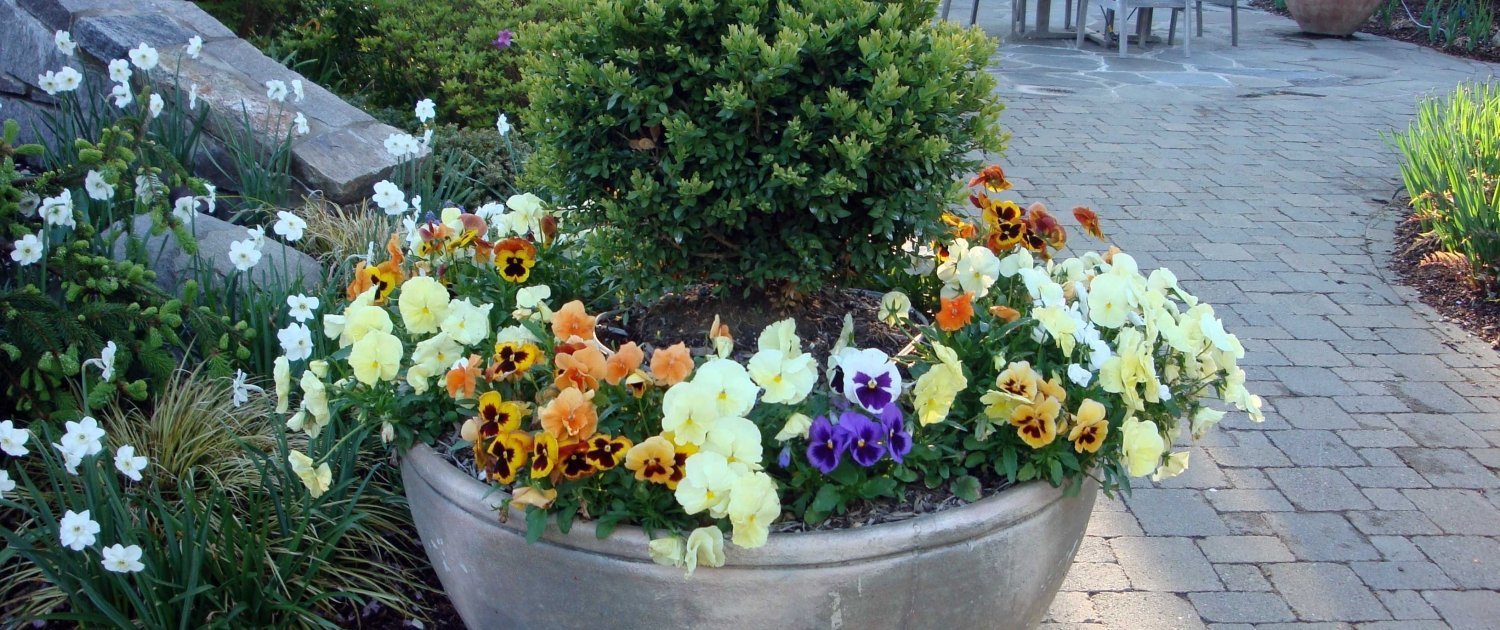
Pansies give us an extended season of color in fall.

Early fall we still want to maintain our plants and gardens. Goldberg and Rodler can plant annuals for a last burst of color using Chrysanthemums, Cabbage, Kale and Pansies. Pansies do well in the cool months right through Thanksgiving. In late fall, cut down the perennials and remove all annuals. This is done after the first frost.  It is also the time to plant a variety spring bulbs. You’ll be glad this was done once the first sign of spring appears.

Fall is a good the time to core aerate the lawn and seed. This will get your spring lawn off to a good start. Keep your lawn clear of leaves since the lawn is still growing and needs the light for root development and color. Remember that a dry fall can be detrimental for broadleaf plants such as Rhododendron and Skip Laurel. Late season watering may be needed because the roots are still alive.

Winter preparation is a crucial part of your property which is sometimes put on the back burner. Cold harsh winds, frozen ground and snow have all damaged our properties in the past. We recommend an anti-desiccant applied to all broadleaf evergreens in November with a second application in January. This works as a waxy blanket film to decrease the evaporation of water from the leaves and the drying effect of winter winds. Winter mulch applied in December is composted manure with peat moss and should be applied around the base of the plants. This helps keep the plants from heaving in the winter and slowly releases organic nutrients for the plants to absorb when the ground thaws. Winter pruning is an ideal time to get your trees in shape. This not only helps with light and air circulation during the growing season but helps prevent wind blown branches and snow load damage. We have seen both in recent years. Be more proactive in the pruning care of your trees.

Please contact Goldberg and Rodler to discuss our fall and winter services.

Written by Rick Schneider
 

https://gandr.impideas.net/wp-content/uploads/2014/10/PANSY-WHITE-AND-PURPLE.jpg 2448 3264 Goldberg and Rodler https://gandr.impideas.net/wp-content/uploads/2026/02/GandR_logo_800.png Goldberg and Rodler2014-10-17 17:53:352019-04-02 19:29:05Fall & Winter Services

Aerate and Overseed for a Pristine Lawn Renovation

September 25, 2014/in Maintenance /by Goldberg and Rodler

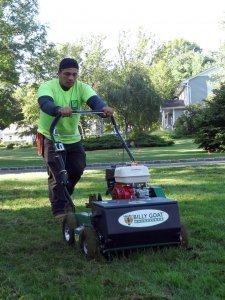
Lawn-Blog1Core aeration follows right behind fertilization
The grass is always greener on the other side.  Well that doesn’t have to be so true anymore.  Now is a great time to start a lawn renovation and have the best looking lawn on your block.  Fall is the best season to implement a lawn renovation and will result in lush, healthy, green grass for years to come.    Over time lawns can use up their stored nutrients and lose their rigorous growing habit.  That is why it is important to resupply your lawn with fertilizer, aerate and overseed every other year or as your lawn needs it.

A slit seeder makes grooves in the grass and controls seed drop ratioThe process begins with fertilization, and should be done at least once a year.  Immediately after, core aeration is necessary to divide and split the existing lawn root structure.   Core aeration removes plugs of dirt from clay soils, leaving a hole to be filled with seed, water and air. This void is necessary for air and water to percolate the dense soil.   A pocket of nutrients is created for the lawn to revive its root structure because there is more space to form new root growth.  When the plugs are pulled out of the ground, it decreases compaction in the lawn, especially in areas with clay based soils.

Once aerated, the next step is to seed your lawn.  Overseeding can rejuvenate dying lawns, and invigorate new lawns.   Look for areas in the lawn that are thinner, and browning, and focus on these spots to apply new grass seed.  If your lawn is still fairly new, overseeding can be useful to create a consistent new layer of grass, giving it the boost it needs for spring.  Overseeding, when paired with core aeration is the best way to get a greener and healthier lawn because the grass seed gets into the pockets and holds moisture throughout the winter.

Lawn-Blog2

Some essential things to remember when doing core aeration and slit seeding are:

  • Mark out all sprinkler heads and invisible dog fences, they could be damaged by aeration machinery
  • Do not mow newly seeded areas until it has grown to 2- 2½ inches tall
  • Avoid all foot traffic, and keep pets off of germinating areas
  • Consistently water seeded lawn everyday for at least 2 weeks; seed that dries out will not germinate.
  • Fall is the best time to aerate and seed.

If you are not a DIY person, don’t hesitate to contact Goldberg and Rodler today.  We have developed a team of professionals to help with your lawn management and renovation.  Goldberg and Rodler can renovate and install lawns on residential and commercial properties.  We are happy to help you achieve your dream lawn today.

Written by Nick Onesto

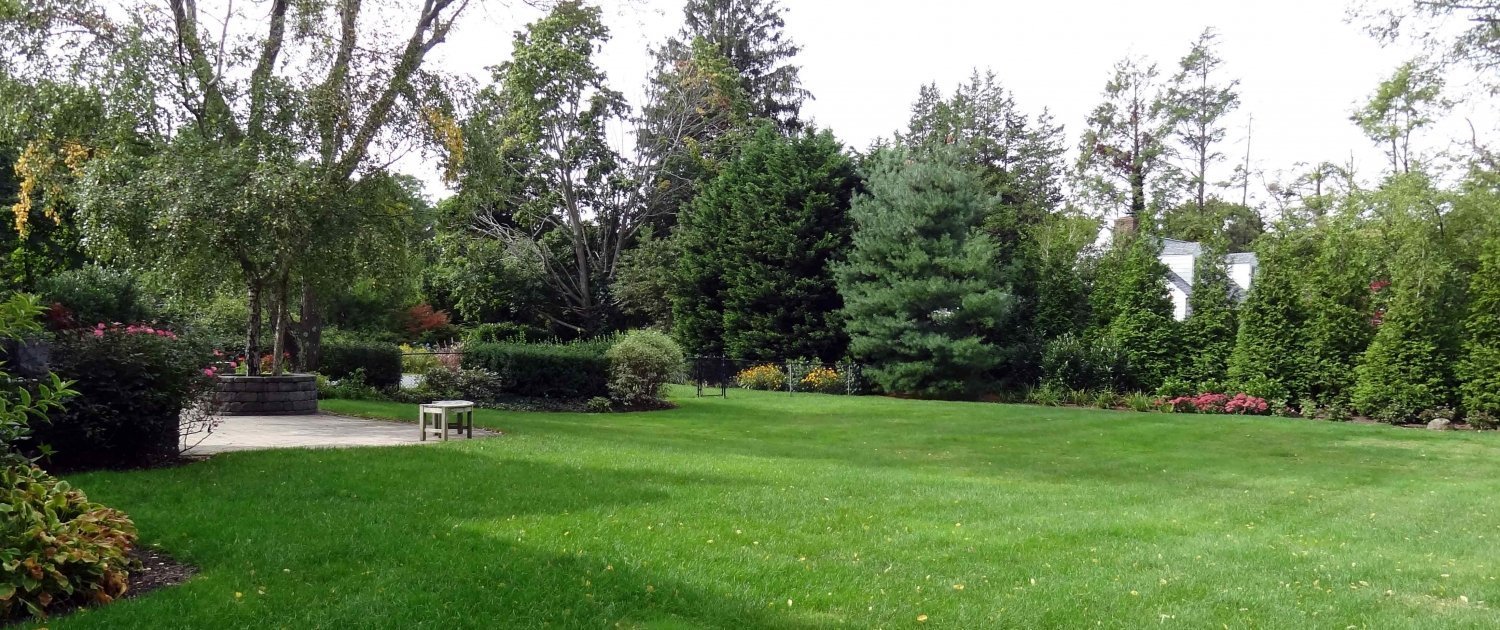
The final result is a thriving and lush lawn

https://gandr.impideas.net/wp-content/uploads/2015/09/Lawn-Blog3.jpg 3456 4608 Goldberg and Rodler https://gandr.impideas.net/wp-content/uploads/2026/02/GandR_logo_800.png Goldberg and Rodler2014-09-25 12:13:222022-04-27 04:31:05Aerate and Overseed for a Pristine Lawn Renovation

Bugs You WANT In Your Garden

July 23, 2014/in Planting, Maintenance /by Goldberg and Rodler

A praying mantis chills out on an evergreen branch to wait for a meal. Picture by Nick OnestoI love bugs. Good bugs that is. Beneficial insects. Bugs that eat other bugs.

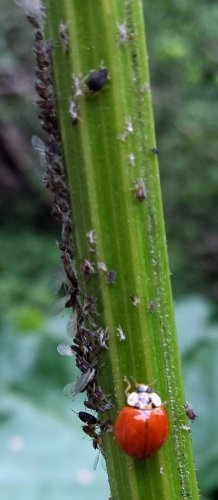
You may have heard of the potato famine back in the 1800’s? You can thank the aphids for helping to spread that all over Ireland’s potatoes. Ladybugs are an attractive and helpful addition to your garden because they help control aphid populations. A praying mantis will eat any bug it can catch. These insects are graceful looking and useful in the garden. Live ladybugs and praying mantis egg sacks are commonly sold in garden centers, online and through the internet. Ladybugs and Lady Beetles devour aphids. One ladybug can eat up to 5,000 aphids per year! Aphids are extremely detrimental to plant communities. They suck the sap out of plants, which contributes to decline in many ways and even death. They can also transmit diseases between plants.

A feast fit for a Lady Beetle. Picture by Nick OnestoSevere harm can be done before you even know what hit your plants. Pest larvae feed on a plant’s roots beneath the soil surface. Beneficial nematodes work underground to eat soil pests like grubs (beetle larvae), flea larvae and maggots (fly larvae), but they don’t eat pest nematodes. Grubs (larvae form of beetles) eat the roots of your lawn. When applying, mix the nematodes with water and apply either early in the morning or around dusk as they’re sensitive to light. Make sure soil is moist before applying so they can move through the soil and water again after applying. It can take anywhere from 2-30 days to see results, so be patient. There are different types of nematodes that will attack different pests so make sure you choose the correct one for your pest problem.

Mosquitoes, well, I believe we are all familiar with these pesky insects. Itchy bites, West Nile, Malaria, the list goes on. I could write a whole entry on these annoying insects alone. If you’re lucky enough to have some dragonflies hanging around, don’t chase them away! Dragonflies like to linger close to water and they eat insects like gnats and mosquitoes.

Lightning bugs are a beetle I can get behind. Their larvae like to nosh on slugs and snails. If you’ve come upon hostas ravaged with holes through the leaves, the likely culprit is slugs. There are many kinds of slugs that will eat a variety of plants, vegetables, flowers, earthworms (which are a garden’s friends), and more. They are truly one of the garden’s most prolific pests. They can also carry parasites, so make sure you wash your garden edibles carefully before you eat them lest you accidentally ingest a slug.

Tree Care Long Island offers beneficial insect applications. Check with our Plant Healthcare expert, Gary Carbocci, to learn about our Integrated Pest Management (IPM) services to protect your landscape investment. Talk to one of our experienced designers if you need to replace or repair a portion of your landscape damaged by pests.

https://gandr.impideas.net/wp-content/uploads/2014/07/prayingmantis.jpg 1836 3264 Goldberg and Rodler https://gandr.impideas.net/wp-content/uploads/2026/02/GandR_logo_800.png Goldberg and Rodler2014-07-23 14:50:292019-04-07 21:28:36Bugs You WANT In Your Garden

Summer Plant Protection

May 8, 2014/in Planting, Maintenance /by Goldberg and Rodler
PreviousNext
12

Gazania blooms best in hot, sunny areas. Can’t wait for summer to see these beauties!

It’s still hard to believe summer is finally here to stay. So after a plant friendly and cool spring it is time to get ready for the hot weather. Our lawns and plants fared well so far and now it is time for all of us, plants and people, to make that seasonal adjustment.

Water is a plant’s best friend during the high heat of summer under the blazing hot sun. Right now  your irrigation system should be set on a summer schedule. Maybe it is time to evaluate what type of system you have. Is it as efficient as it could be? In spring you don’t need a lot of supplemental irrigation but when the temperatures begin to climb and rain isn’t on the horizon, that system will be getting a lot more use. It is better to water less frequently and more deeply than every day for only a few minutes. You want to make sure the water penetrates through the mulch layer and can reach the roots. A drip system lays under the mulch/soil and uses less water than a traditional mist or rotary heads.

Early in the day is the best time to irrigate. If you water in the middle of the day, most of the water will evaporate before it has a chance to penetrate through the soil. If you water late in the day fungus will develop, especially in your lawn. Avoid letting water collect on leaves in the middle of the day; like ants under a magnifying glass, the leaves will fry. Leave your lawn 3-3.5″ high in the hottest months. This will help keep the roots cooler by providing some shade. Cutting too short can contribute to browning out. When mowing your lawn, remove no more than 1/3 of the lawn’s height at one time.

Healthy, vibrant lawn. No weeds, well irrigated and maintained.

A few organic choices for the garden that will help your plants thrive include mulch, compost and pruning. Incorporating compost into your soil adds organic matter and will give your plants a boost in nutrients, minimizing the need for synthetic fertilizers. Mulching around your plants keeps the soil cooler in summer and helps with moisture retention. Also, you can mitigate potential damage from poor air circulation or low light penetration with proper pruning.

When it gets hot and humid, there are certain pests and diseases that thrive. Scale, Black Spot, Powdery Mildew and Fungus Gnats are several  to watch out for. Call us if you see small, fuzzy white things that jump on and off of your plants or if you see black spots or a white film on any leaves.  If you see clouds of tiny flying insects, most likely around a wet area, it could be fungus gnats. While they are harmless to humans (they only feed on rotting organic matter) this could indicate you have a standing water issue, which will attract a much worse insect: the mosquito. Our sister company, Tree Care Long Island, has several treatments including horticultural pruning, beneficial insects and liquid and granular applications (including organic options), to treat these issues.

More insects to watch out during the summer include Aphids and Leafhoppers, Grubs, and Spider Mites. Aphids and Leafhoppers can spread scale and powdery mildew between your plants. Grubs eat the roots of your lawn, creating bare patches and holes in your lawn from predators like crows and raccoons digging for dinner. Spider Mites suck the juices out of a plant’s leaves and/or needles and cause the plants to defoliate and die.

Is your landscape ready for the heat of summer? If you see any of these conditions, or would like our advice, just contact us and we will be happy to help.

https://gandr.impideas.net/wp-content/uploads/2014/05/gazania.jpg 1800 2700 Goldberg and Rodler https://gandr.impideas.net/wp-content/uploads/2026/02/GandR_logo_800.png Goldberg and Rodler2014-05-08 16:34:262022-04-28 03:54:42Summer Plant Protection

Free Property Evaluation – Winter Damage

March 21, 2014/in Planting, Maintenance, Commercial /by Goldberg and Rodler

A dynamic landscape composition of trees, perennials, boulder wall, waterfall, and annuals.We were hit hard this winter with near record snow totals combined with colder than normal temperatures, which had many of our plants covered in a frozen snow load. Ice storms and extended sub-freezing temperatures added to the stress on our plants as well as record amounts of road salt used this season.

In April, once the weather warms up and the plants break dormancy, you will be surprised to see the damage our properties suffered this winter. Broken, leaning or damaged branches on trees and shrubs. Browning or loss of leaves will appear due to a dry fall and cold winter winds which dry out broadleaf evergreen shrubs. Plants like Rhododendron, Skip and Cherry Laurel, Japanese Holly, and Leyland Cypress will either drop their leaves or have extreme browning of foliage. We can diagnose a treatment and pruning for these plantings to help them rebound from this difficult winter.

Let’s not forget the increasing population and migration of deer and the damage they are causing to our landscape. They will be looking for food from now through early spring and they won’t be picky. Alternative plantings that are deer resistant may need to be incorporated into your garden to help deter them away from your property. Another option is a deer fence which we can work into a property with minimal visual exposure to help protect your landscape investment.

Not only were our plantings hit hard but also our hardscape elements such as patios, decks, pool areas and driveways. I have already seen cracking, heaving and uneven settling of these materials. Repairs will be needed or it’s time to consider replacing some of these elements.

April is a good time for a property evaluation and to reassess your goals for the upcoming season. A Goldberg and Rodler designer is available to meet with you for a free property evaluation and determine the extent of the winter damage and practical solutions. Now is the time to plan for the year. Call (631) 271-6460 or email us to arrange your spring consultation and evaluation now.

Written by Richard Schneider

https://gandr.impideas.net/wp-content/uploads/2014/03/Free-Property-Evaluation1.jpg 1516 2250 Goldberg and Rodler https://gandr.impideas.net/wp-content/uploads/2026/02/GandR_logo_800.png Goldberg and Rodler2014-03-21 17:32:292019-04-02 19:31:19Free Property Evaluation – Winter Damage

Winter Damage Assessment – Tree Care Long Island

March 21, 2014/in Planting, Maintenance, Commercial /by Goldberg and Rodler

Our team follows safety protocol pruning dead trees and shrubs, keeping your home and family out of harms way.It’s been a rough winter. Many of our trees and shrubs were damaged: Leaning over, possibly breaking with heavy snow loads, filled with dead wood and hazardous to our landscape. Our children will be playing outside soon so you need to check for safety as well as the health of your trees and shrubs.

With our certified arborists, Tree Care Long Island can provide a thorough diagnosis and evaluation of your property before the growing season begins. You probably haven’t been outside recently and walked around your property to see what winter damage there is, so it is important to have a professional help evaluate your property.

Shrubs as well as trees should be treated, pruned or removed if they are hazardous. From our observation, properties that were pruned before Hurricane Sandy suffered minimal damage to property and home. Many properties still need this type of maintenance oriented horticultural pruning. Is your landscape ready for the next major storm?

Winter and early spring are the ideal time to address winter damage and structural issues with pruning and removals. Fertilization and environmentally safe pest control are also recommended.

Protect your property and family. Start a free site evaluation with our certified arborist from Tree Care Long Island.  Call (631) 271-6460 or email us today.

Written by Richard Schneider


https://gandr.impideas.net/wp-content/uploads/2014/03/Winter-Damage-Assesment1.jpg 3456 4608 Goldberg and Rodler https://gandr.impideas.net/wp-content/uploads/2026/02/GandR_logo_800.png Goldberg and Rodler2014-03-21 17:18:312019-04-02 19:31:28Winter Damage Assessment – Tree Care Long Island

Spring Landscape Preparation

March 18, 2014/in Planting, Curb Appeal, Patio, Maintenance, Commercial /by Goldberg and Rodler

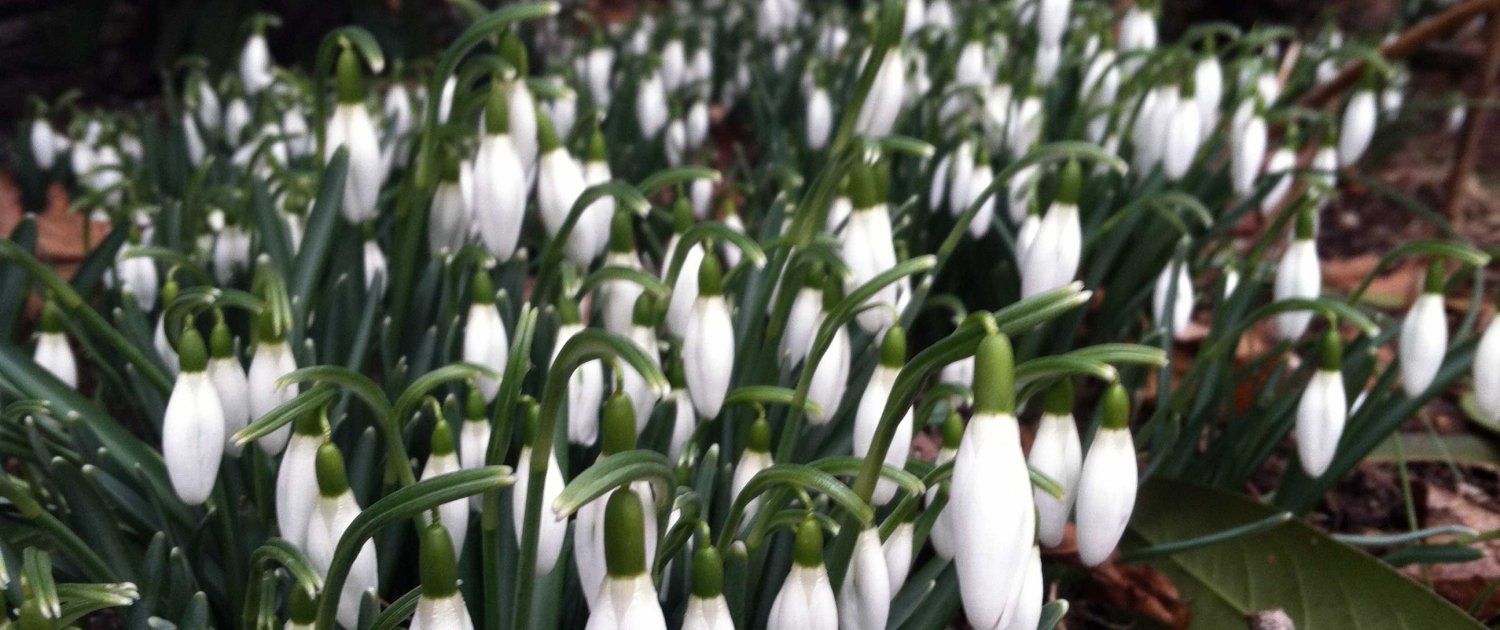
Snowdrops brighten the landscape in early spring. Photo cred. Sal MasulloWinter is retreating and the dormant landscape is thawing, ready to wake up and stretch out its limbs and leaves. Start your spring cleanup early by generating a check list for you landscape.

1. Walk around your property and assess snow/ice damage to gardens and hardscape. The heavy ice and snow builds up on top of plants and the branches will break under pressure. The ice also causes freeze-thaw which results in heaving and cracking in asphalt and pavers over time.

2. Identify potential drainage problems – As the ground thaws completely, settling may occur, resulting in new pooling and damp areas. Watch out for these now!

3. Lawn Care – Your lawn may seem flattened and weak in the early spring, so lightly rake your lawn to stimulate new growth to begin, but don’t rake too hard or you can damage your lawn and cause burn spots.

Pruning your shrubs and trees in late winter/early spring is a good way to promote new growth. Goldberg and Rodler Inc. has certified arborists and horticulturalists that can help you with analyzing the integrity and health of your trees and shrubs. Some damages aren’t recognizable to the average eye, but our experts can identify the signs of stress and teach you along the way. Removing dead wood in early spring will cause shrubs and trees to grow vigorously and increase the amount of flowers. Pruning can bring shape, light and air to your overgrown trees resulting in better overall health and protecting your landscape investment. Spring is the best time to plant slow-to-root trees such as Red Maple, Flowering Dogwood, Magnolias, and Oaks because they need a full growing season to establish their root systems. This is also a great time to apply a granular time released fertilizer to your planting beds.

As your spring bulbs like daffodils, tulips and hyacinth show their colors you can start dividing your perennials and spread them out in your landscape. They will grow throughout the spring and summer giving you more color and texture in your garden and provide a great way to stretch your planting budget.

Spring is bursting with color, featuring sweeping Daffodils and Star MagnoliaFrost is still a concern in the first months of spring. Temperatures can spike in early spring but drop drastically at a moment’s notice, so if you planted tender annuals already, you will want to take precautionary measures such as covering the plants with containers or bringing potted plants indoors. It is a good idea to plant hardy annuals that can take the cold temperatures such as pansies, marigolds, and dusty miller, then transition with those plants to your summer plant pallet.

Check for insects and diseases affecting your plants. For example, you may notice little white scale eggs on your plants which are an infestation rather than a pathogen. These pests hatch and live off the bark of the tree. Plants that are frequently infested with scale eggs are Magnolia, fruiting trees and shrubs and many varieties of Euonymus. If you catch them early enough this spring, the plants can be protected by pruning the infected branches, or spraying with organic, environmentally safe horticultural oil.

Venture out and enjoy the comfortable warm temperature of spring and transition your life outdoors yet again. The amount of work to be done can be daunting so if you have any questions or require guidance, give Goldberg & Rodler a call and our friendly staff will work with you personally.

Written by Nick Onesto

https://gandr.impideas.net/wp-content/uploads/2014/03/Spring-Landscape-Prep1.jpg 2304 3456 Goldberg and Rodler https://gandr.impideas.net/wp-content/uploads/2026/02/GandR_logo_800.png Goldberg and Rodler2014-03-18 13:15:142019-04-02 19:31:46Spring Landscape Preparation

Spring Cleanup and Startup

March 13, 2014/in Planting, Maintenance /by Goldberg and Rodler
PreviousNext
12

Spring is here.

The following are 20 things you should know about spring.

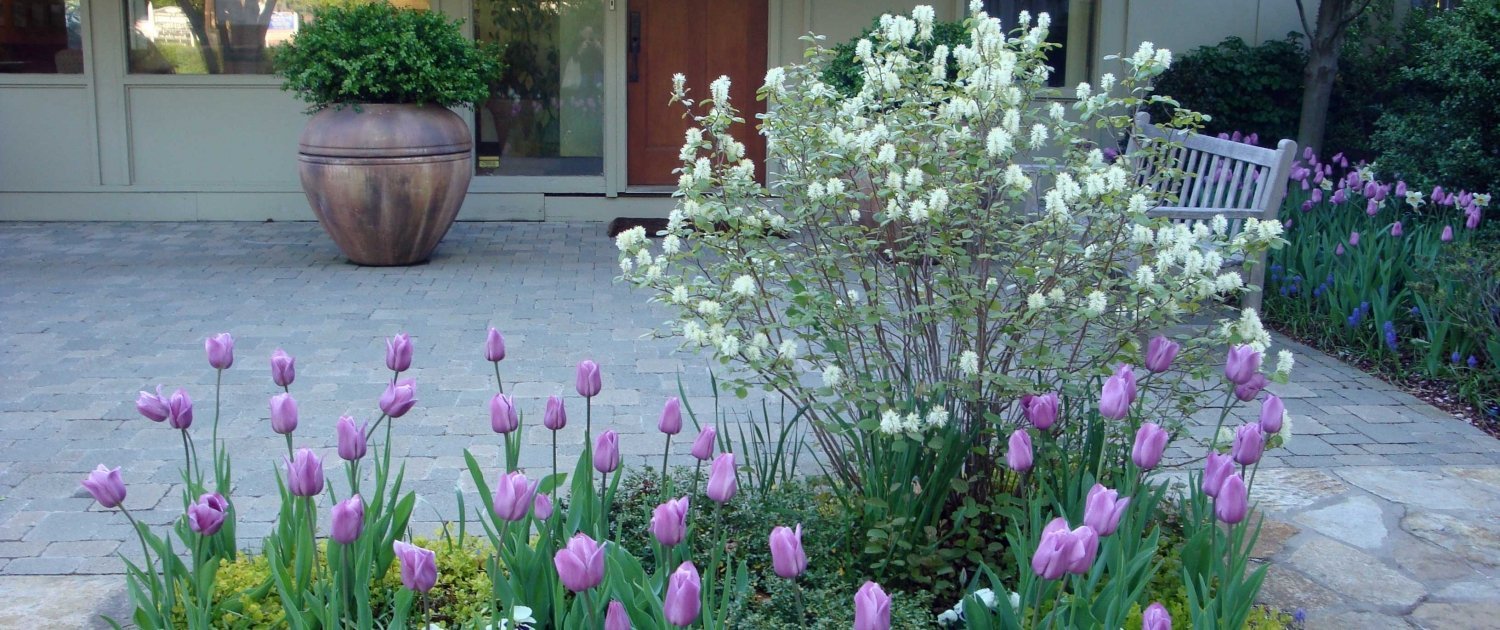
Who’s ready for tulips, pansies and Dwarf Fothergilla flowers?

1. March 20th is the first day of spring. Before long the first day of summer (June 20th) will be here!

2. Assess winter damage to plants and the landscape.

3. Apply pre-emergent to lawns and beds before the forsythia finish blooming.

4. Prune back hydrangeas and roses now. However, other plants are just waking up, so don’t do any heavy pruning on other trees and shrubs. Have a certified arborist evaluate your fruit trees.

5. Cut back liriope and perennials. Now is a good time to divide perennials.

6. Watch for settlement from freeze/thaw cycles around new pools and drywells.

7. Review photos from last year’s vegetable and annual plantings.

8. Add organic amendments like compost to the soil in early spring.

9. Rotate crops, especially vegetables. Organically add nitrogen back to the soil by planting soy beans or peas.

11. Plant summer annuals after May 15th (wait for danger of frost to pass). Having a summer party? Plan your annuals now for robust color and lush beds. Get your tubers ready. Dahlias and Canna Lilies are ready to go in soon!

12. Monitor your irrigation system. DO NOT overwater. Adjust the watering schedule as summer approaches.

13. Experiment with alternatives to impatiens. DO NOT plant Impatiens walleriana! They have a problem with downy mildew all across the United States and they WILL disappoint you. Try something new!

14. Bring in your bird feeders. Birds have plenty of food now. Clean and store them for next winter.

15. Spray horticultural oil to smother insect egg cases. Check your lawn for divots. Does it look like a really poor golfer has been there? Those holes are from squirrels, raccoons and birds looking for food.

16. Watch for frosty nights and protect newly planted and tender annuals and vegetables.

17. Join a CSA (Community Supported Agriculture) farm. They’re popping up all over. If you have a small piece of property or too much shade, this is a great way to contribute to a cooperative garden and reap the benefits in fruits, vegetables and friendships.

18. Test your lawn’s pH. Let the soil and our trained horticultural experts tell you what it needs.

19. Check the garden shed for old and outdated fertilizers and chemicals. Dispose of them properly.

20. Last, but certainly not least, consult with your favorite landscape designer. Now is a great time to contact us. Call to set up an appointment with one of our talented landscape designers at (631) 271-6460 to discuss your ideas.

Soon pansy faces will great us from pots and daffodil manes from the beds.

Written by Ashley Palko Haugsjaa and Sal Masullo


https://gandr.impideas.net/wp-content/uploads/2014/03/pansyboxwoodspring.jpg 2448 3264 Goldberg and Rodler https://gandr.impideas.net/wp-content/uploads/2026/02/GandR_logo_800.png Goldberg and Rodler2014-03-13 19:16:572019-04-07 21:12:42Spring Cleanup and Startup

The Benefits of a LiveRoof System

January 14, 2014/in Planting, Maintenance, Other /by Goldberg and Rodler

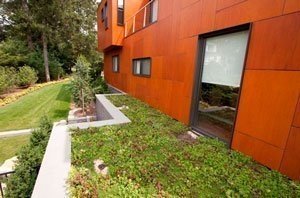
A green roof or wall is just one of many steps toward more sustainable and environmentally friendly landscapes. We installed two green roofs at one of our award winning projects in Eaton’s Neck using the LiveRoof System. The residence was designed specifically for several green roofs and not just for aesthetic value but environmental benefits as well.
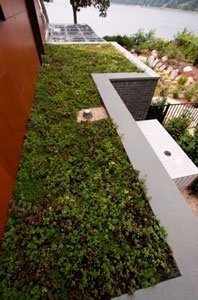
The biggest advantage of installing a LiveRoof is to reduce stormwater runoff. The less polluted water that enters the sewer systems and groundwater is better for the environment. In the long term, if less pollutants enter the groundwater, less money will be spents treating runoff before it reenters the groundwater system. Reducing asphalt roofing surfaces also helps to reduce the heat island effect, where heat is absorbed during the day via streets, roofs and other dark, impermeable surfaces and released at night. Urban areas especially are a large contributor to the heat island effect, increasing global climate change. Sedums, which make up the majority of green roof plantings, transpirate at night, which cools the air. They also create an insulating barrier for both temperature and sound. A 25-50% energy savings is possible.

The beauty of LiveRoof, a pre-grown modular system, means that it has minimal irrigation needs. Once established, the plants require very little maintenance. We specify fire resistant succulent plantings that have year round interest. Plants have the ability to clean the air of pollutants as well keeping the air quality higher around your home. LiveRoof’s lightweight modules decrease load on the roof in comparison to plant-in-place systems and repairs require minimal disruption of the system because trays can removed and replaced individually.

LiveRoof plant modulesLiveRoof is a modular system of living plant material. These LiveRoof applications can be installed on flat or low pitched commercial and residential roofs. The sister product to LiveRoof, LiveWall, is a great way to dress up a non-descript architectural wall or to add some life into an intimate patio garden or hot tub area. The LiveWall can even be used to grow edibles and herbs for a kitchen garden. As a certified installer of LiveRoof, Goldberg & Rodler is your source for all things green.

Contact us today for more information, or visit LiveRoof to find out more.

https://gandr.impideas.net/wp-content/uploads/2014/01/LiveRoof_EatonNeck1.jpg 198 300 Goldberg and Rodler https://gandr.impideas.net/wp-content/uploads/2026/02/GandR_logo_800.png Goldberg and Rodler2014-01-14 19:02:442019-04-02 19:33:29The Benefits of a LiveRoof System

Winter Services: Protection and Prevention

December 16, 2013/in Maintenance /by Goldberg and Rodler

Are you ready to say goodbye to 2013? Is your landscape ready for 2014? While everyone is busy preparing for the holidays, we’re preparing for winter and spring. There’s still time to protect your plants, clean out your gutters and schedule winter pruning.

Applying anti-desiccant to evergreens.PROTECTION: We’re reiterating the important message in our previous article about protecting your plants for the harsh weather we expect during the winter. An anti-desiccant application can reduce water loss through the leaves during a time when your plants can’t take in water from the frozen ground. You can reapply mid-winter for additional protection.

Road salt can damage your plants from piled up snow, as well as salt spray from the ocean/sound if you’re near the water. Anti-transpirant is one option for reducing the potential for burned foliage. Heavily irrigating the soil in the spring helps wash away the accumulated salt in the soil. Fertilizing with an organic, salt-free fertilizer will promote new leaf growth and proper pruning can ensure the integrity of the plant’s structure.

PREVENTION: During a heavy snowfall, if the gutters aren’t cleared of snow and debris, ice dams can form on the top above the gutters and water may back up under the flashing behind the gutters. This can cause leaks, and if not treated, mold growth . It is very important to make sure these are clear after a storm if the snow doesn’t melt away. Leaves and debris will further aggravate the issue by not allowing proper drainage into the gutters as the snow melts.

WINTER PRUNING: This is better for deciduous shrubs, evergreen hedges and small ornamental trees. The best time for this service is between Thanksgiving and Saint Patrick’s Day.

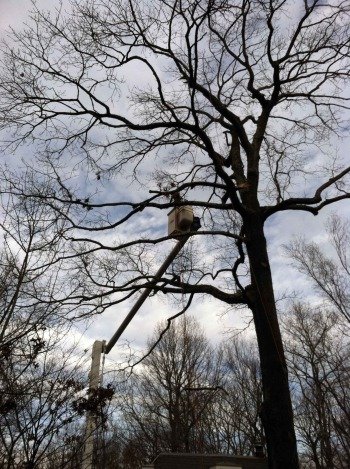
Using a bucket to get up into the bigger trees.Removing dead wood and crossing branches helps open plants up to allow light and air to penetrate into the plant while removing potential host sites for insects. Selective hand pruning will help plants keep their natural, intended form. Winter pruning of your ornamental landscape plants will increase the health and vigor of the plants by stimulating new growth, while keeping the size of the plants in check so your landscape can last many years.

Winter pruning has many other benefits. With no leaves on the deciduous plant material, the structure and potential shape can be clearly defined. Plants heal more quickly in the winter so there is less trauma and almost no potential for harboring insects and disease in the fresh cuts.

Protect your investment in the garden by having one of our professional horticulturalists come by and provide a complimentary winter pruning consultation and estimate. Contact us today to schedule your consultation.

Written by Sal Masullo and Ashley Palko

https://gandr.impideas.net/wp-content/uploads/2015/09/antitranspirant.jpg 263 350 Goldberg and Rodler https://gandr.impideas.net/wp-content/uploads/2026/02/GandR_logo_800.png Goldberg and Rodler2013-12-16 20:05:002019-04-02 19:33:40Winter Services: Protection and Prevention
Page 2 of 512345

BACK TO MAIN BLOG

SEARCH BLOG

BLOG CATEGORIES

  • Outdoor Planning
  • Planting
  • Outdoor Kitchen
  • Stonework
  • Curb Appeal
  • Patio
  • Pool Area
  • Woodworking
  • Maintenance
  • Commercial
  • Other
  • 216 East Main Street, Huntington, NY 11743

  • 631-271-6460
  • Contact Us
  • Facebook
  • Instagram

© 2026 Goldberg & Rodler, Inc. All rights reserved.

Scroll to top