Winter Interest in the Garden
Snow topped pine and spruce brings out the blue green color of the needlesWinter gardening in the Northeast can be quite interesting. You might be surprised how enjoyable and beautiful this season can be.
Some highlights during winter include:
 EVERGREENS: They stand out this time of year without competition from flowering trees and shrubs. My favorites species are all types of Holly, Evergreen Magnolia, Cypress and Blue Spruce. Hollies are a deep, shiny green and some have red berries which are great for birds. Variegated English Holly is used as a specimen with the white variegation highlighting any garden space. Interesting structural forms pop when combined with blue-green or yellow foliage on different cultivars of Hinoki Cypress. Anything blue toned like the Colorado or Dwarf Montgomery Spruce is a welcome sight in the winter. I also use cuttings from these for winter decoration in my garden pots and urns or even in a vase indoors.
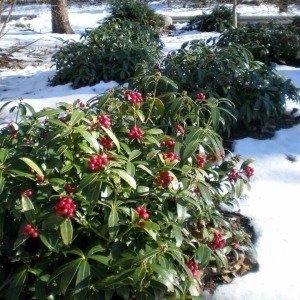
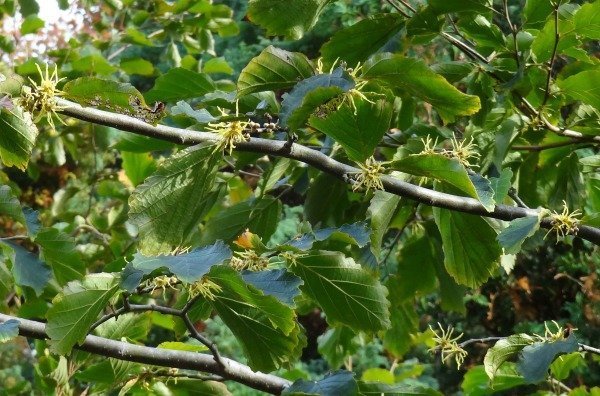
Skimmia, bright with red berries in the snow covered landscapeFLOWER COLOR: There are several options for winter blooms. ‘Arnold Promise’ Witch Hazel blooms mid February with fragrant yellow flowers. Lenten Rose (hellebore) is a perennial that blooms in early March and Snow Drops are bulbs that bloom in late February. Heather is evergreen and can start blooming in November right through to early March. The best thing about these plants is that they bloom anywhere from one to three months and are all deer resistant.
Beautiful closeup of the exfoliating bark on a Paperbark MapleBRANCH COLOR: Try the Red Twig Dogwood, a medium sized deciduous shrub. Their summer appearance is not striking but when is snows the red stems will catch any ones attention. There is also a yellow variety. Important Tip: Prune older brown branches down to the base in the spring to encourage new growth. This new growth will start out a light red and intensify as the season progresses. For the late fall/early winter use deciduous Winterberry. It will give a spectacular show of color with red berries, great for the wildlife. Other plants with attractive berries for the wildlife are Viburnum, Sumac and Bayberry which are all native to our region.
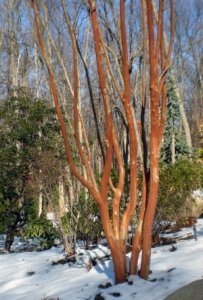
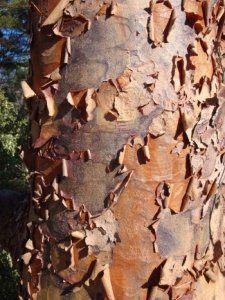 DECORATIVE BARK: Once trees lose their leaves for the winter, their interesting structure and bark is more noticeable. Textures range from the exfoliating bark of River Birch, the cinnamon color and exfoliating bark of Crape Myrtle to the the mottled bark of a mature Sycamore, Dogwood or Stewartia to the smooth, gray bark of a Beech tree. Branching habits are visible on the Contorted Filbert, also known as Harry Lauder’s Walking Stick, or the Corkscrew Willow with its curly, twisting branches. These are great to cut and bring indoors for floral arrangements or to use as a support for other indoor plants.
The winter can be full of garden delights.
Written by Rick Schneider
 DECORATIONS: If you like, skip most of the lights and add live plant material. Use evergreen roping, pine cones and bows to add both color and texture. Hang a wreath on your shed, gate, front door or barn with a spot light. The wreath can be bittersweet wine, grape vine or even winterberry twigs for a unique look. Set electric candles in the front and side windows to create a feeling of warmth and home. This will give the home depth when seen from the road. You can also use plant material from your yard and add them into your garden pots or make your own spray to hang on a door, gate or mail box. Use Holly, Inkberry, Rhododendron, Skimmia, Evergreen Magnolia, Cypress or Birch branches or other plants with decorative berries. With the cold weather they should look fresh for weeks.
 As we enter November and the mums finish flowering, fall may feel bittersweet. Bitter in the sense that winter is approaching and sweet with the delicious aromas of pumpkin spices, wood smoke and hot apple cider. Fall is a great time to witness local foliage change from green to rich, vibrant hues of purple, red, orange and gold.
 Dwarf Fothergilla in fall color
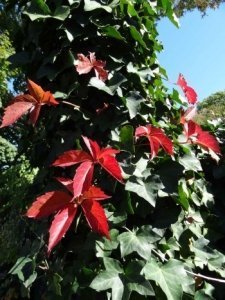 Virginia Creeper in English Ivy
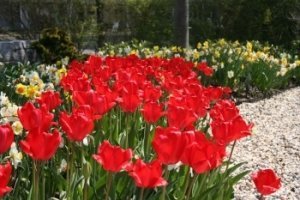
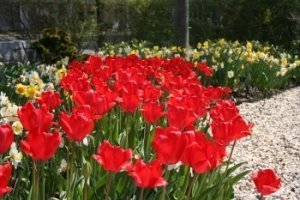 Bulbs. My favorite kind of fall shopping. The varieties available get more diverse and spectacular every year. We’re placing orders now for installations to occur before Thanksgiving. Many times the first signs of spring are those crocus and miniature daffodils coming up in almost bare beds. Don’t miss out on a fantastic spring color display! Daffodils are critter resistant but tulips are on the menu for deer, squirrels and other furry friends so plan accordingly. The key to a show stopping bulb display is massing. If there weren’t enough one year, add more for the next season. You can never have too many bulbs! They are some of the most cost efficient plants you can put in your garden, especially if you get a naturalizing variety which will multiply and bloom for many years.
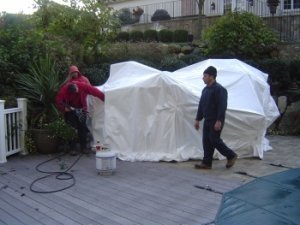 Don’t forget to schedule your fall cleanup. Perennials and ornamental grasses need to be cut down, leaves collected and disposed of, whether on the ground or in the gutters. A blocked gutter can cause roof leaks if the water backs up under the shingles. Protect your outdoor furniture. We offer shrink wrapping for pots, tables and chairs, barbecues and other outdoor furnishings. Remember to have a professional blow out irrigation and pool lines to prevent damage from water freezing and thawing in the lines throughout the season. Drain and cover any fountains. Talk to a professional for pond care and winterization if you have animals in the pond. Hungry birds and raccoons can make a meal out of unsuspecting koi and goldfish when the weather turns nasty.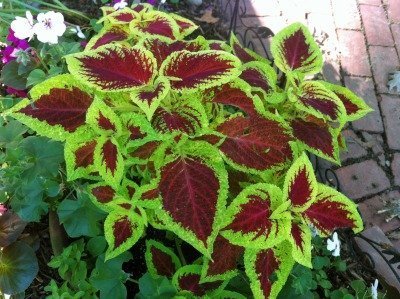
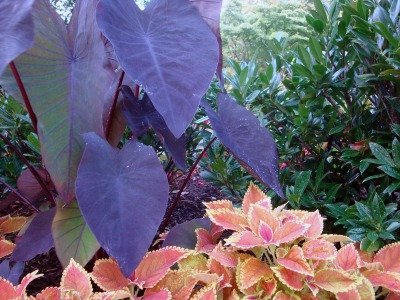
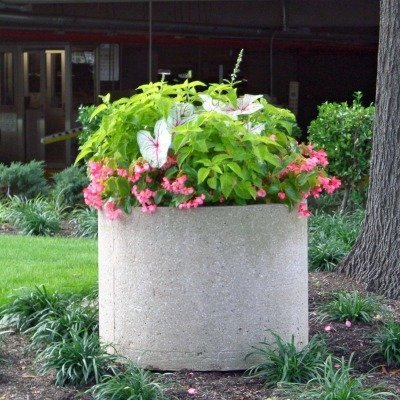
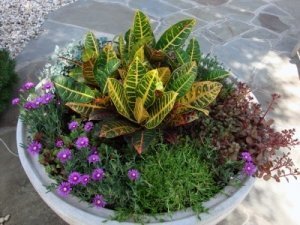 Impatiens, lantana, elephant ears, petunias and other annuals are found in summer gardens year after year. The blight on impatiens has taken the number one landscape annual out of commission. Dragon Wing begonias are a great shade alternative. They flower profusely and look great in a bed or a container and provide a unique texture in the landscape.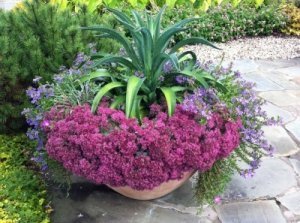
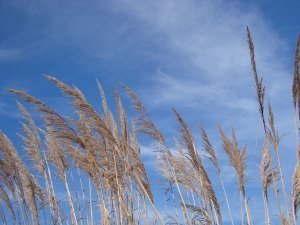
 Grasses, whether evergreen or perennial, can give you good groundcover all year long. Green liriope doesn’t get a haircut until Mid-March. Acorus only needs a light raking. Dwarf fountain grass plumes usually last though early winter if there hasn’t been a heavy snowfall. Grasses like this should be cut down as soon as they start looking messy, but don’t cut them down based on color. The brown plumes add a feathery, light look to your landscape and contrast well with blue skies and white snow.